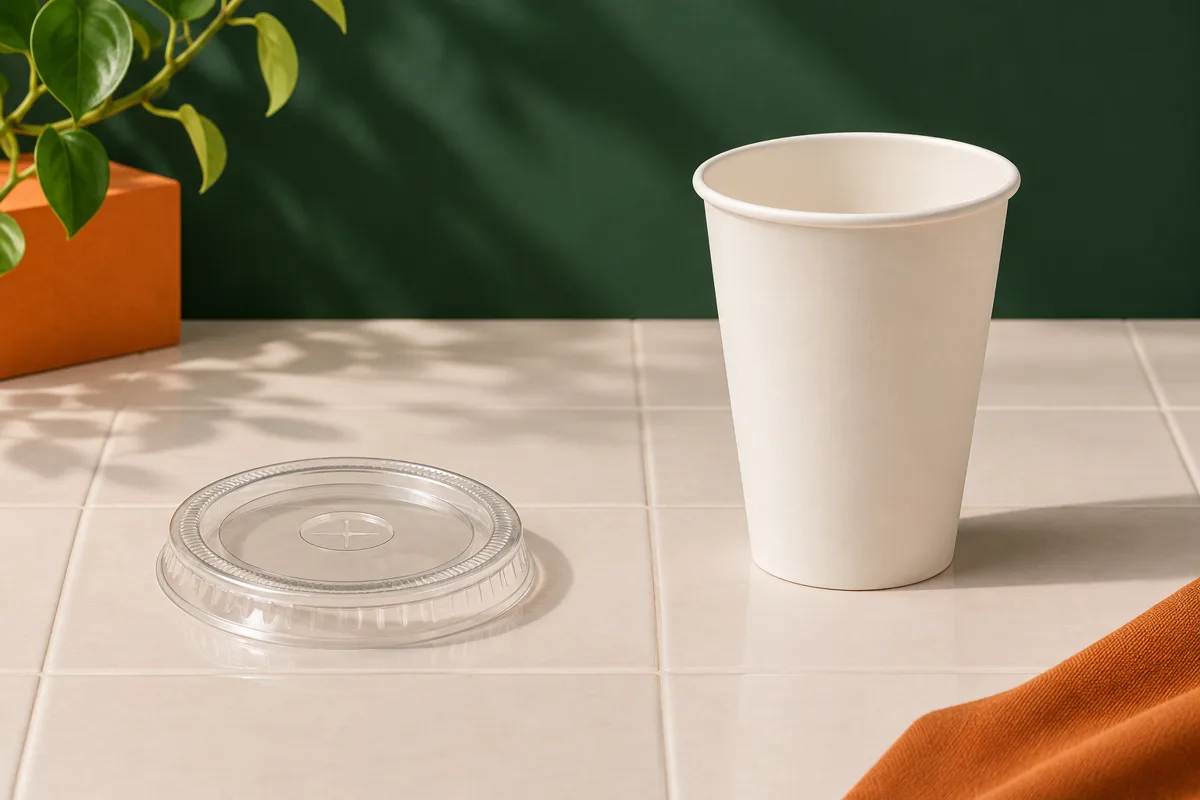
Treat capacity and lid relationship separately
Two cups described as sixteen ounces do not automatically use the same lid. The selected dome list includes C-KC16, while the selected flat-lid list includes C-KCP16 and C-KCP16W. The ounce description describes a capacity category, not a complete rim geometry or product identity. The local finder therefore requires the exact selected cup code. It does not approve a combination from a capacity number entered on its own.
Read the material and series as part of the identity
The selected C-KDL626 record is associated with named plastic cold-cup codes, while the selected C-KCL90 record names paper-cold-cup codes. The same supplier can offer multiple cup families with similar capacities. A paper appearance or clear appearance alone is still insufficient evidence, since the exact code carries the reviewed relationship. Keep material, series and suffix in the ordering note rather than shortening the description to small, medium or large.
Make a mixed-cup purchase list explicit
Suppose a cafe holds C-KC16 for one service station and C-KCP16W for another. A purchaser should retain two rows and the appropriate selected lid record for each. Combining the cup counts into a single sixteen-ounce total would hide the different requirements. The stock tool deliberately calculates one selected supply at a time. It does not assume all cups in a business can share a common lid, and it does not create a cross-brand adapter recommendation.
Resolve an unidentified carton before reordering
When the existing carton lacks a readable cup code, the correct result in the finder is unknown. Ask the supplier for the actual item identity and current matching-lid information rather than selecting the closest capacity. A manual trial may be part of a business’s own procurement process, but this site has not performed or documented that trial. Its source-match result stays separate from actual fitted verification and any leak or transport assessment.
Keep a new cup family out of an old order row
If a business changes from the named paper cold cup to a clear plastic cup with the same capacity, keep the lid question open while identifying the new code. Do not carry the old C-KCL90 result into the new family automatically. The local source map may return a different named relationship or unknown. That change is an evidence check, not a price-only substitution, even when both cup descriptions use sixteen ounces.
Sources & scope
Checked November 4, 2026. Manufacturer and retailer references support the specific statements. Dated displayed prices are not final checkout quotes, performance rankings or performance testing. This shopping reference does not replace the exact product label or qualified individual advice. Current received labels, actual fitted configuration and independent food-contact/material/compatibility/content/commerce review remain pending.
Karat / LollicupStore: C-KDL626 exact current offer and matching-cup list ↗
Karat / LollicupStore: C-KCL90 exact current offer and matching-cup list ↗
Karat: Paper Cold Cups and Lids specification, version2026.08.20 ↗
Keep reading
Why should a lid order start with the cup code? ↗
Is a lid’s outside edge the same measurement as the cup’s rim? ↗
What does a source-matched cup-and-lid result actually prove? ↗